Tuesday, 30 May 2023

I'm Off My Beaten Track in Egypt ...

... taking a leisurely sail along the Nile.  According to my journal, even ordinary sailing days had a fair share of excitement ... 

SAILING, SICKNESS, AND A CASUALTY 


As we are sailing all day I made my way to the sun deck to sit in the shade and read.  My interest in the book soon waned.  The passing scenery was not to be missed.  Blot out the noise of the ship's engine and erase the odd tractor, Peugeot or lorry from the landscape, and I was sure nothing had changed for 4000 years.
The hot afternoon sun was on the point of driving me to my bed for a siesta when there was a thud.  The ship's engine stopped and our bow began to drift towards the bank.  Next, the sun deck was awash with men in crew uniforms all frantically pulling up the floorboards.  At least eight of these sailors I had never seen before - where did they all come from? - more to the point, with all the cabins occupied, where did they all sleep and eat?
Furniture was piled high and moved around and we passengers found ourselves in the way.  Not that we were told we were an obstacle - the Egyptians were far too polite.
The chain that linked the rudder to the helm had broken - that was the thud.  With the full chain and cable exposed, it was a simple matter of loosening the double screws to provide some slack, re-arranging the chain and then tightening the screws.  A fellow traveller, who insisted on introducing himself as I— (I'm in civil engineering, you know), took great pains to explain the technicalities to me in minute detail.  All I really wanted to know was whether the problem could be fixed or not.  As far as I could see, the sailors were only doing what I do to the washing line when it gets worn in one particular spot!
I— (I'm in civil engineering, you know), droned on and on.  I nodded and smiled in what I thought were all the right places.  Meanwhile, the crew busied themselves, replaced the floorboards and then returned from whence they had come.
Despite that piece of excitement, I have to report that the sick list had grown considerably and now included the boat.  I counted that, excluding myself, there were only five other passengers who were still healthy.  Well, they did all partake of the street food the other day.  I stuck with Moz's Maxim - if the food is not cooked and you can't wash it yourself, don't eat it.  As Moz had worked and travelled all over the Middle East and North Africa, I set great store by his advice.
Needing some quiet, I returned to the cabin and sat outside undisturbed.  It was very nice of the few Fellow Travellers to speak to me as they passed on a tour of the deck.  But, I don't mind being by myself.  I was perfectly content floating upriver, quietly taking in everything I possibly could.  I sat and watched the clumps of lotus flowers floating on the eddies and contemplated the very blue and completely cloudless sky.
On a sandbank was a dead water buffalo, rotting in the heat and being pecked at by the birds. Wealth, to a certain extent, can be measured in terms of animals.  A donkey is low on the scale, with oxen or water buffalo about the middle, and a camel the most valuable.  That rotting animal probably represented a family's life savings.
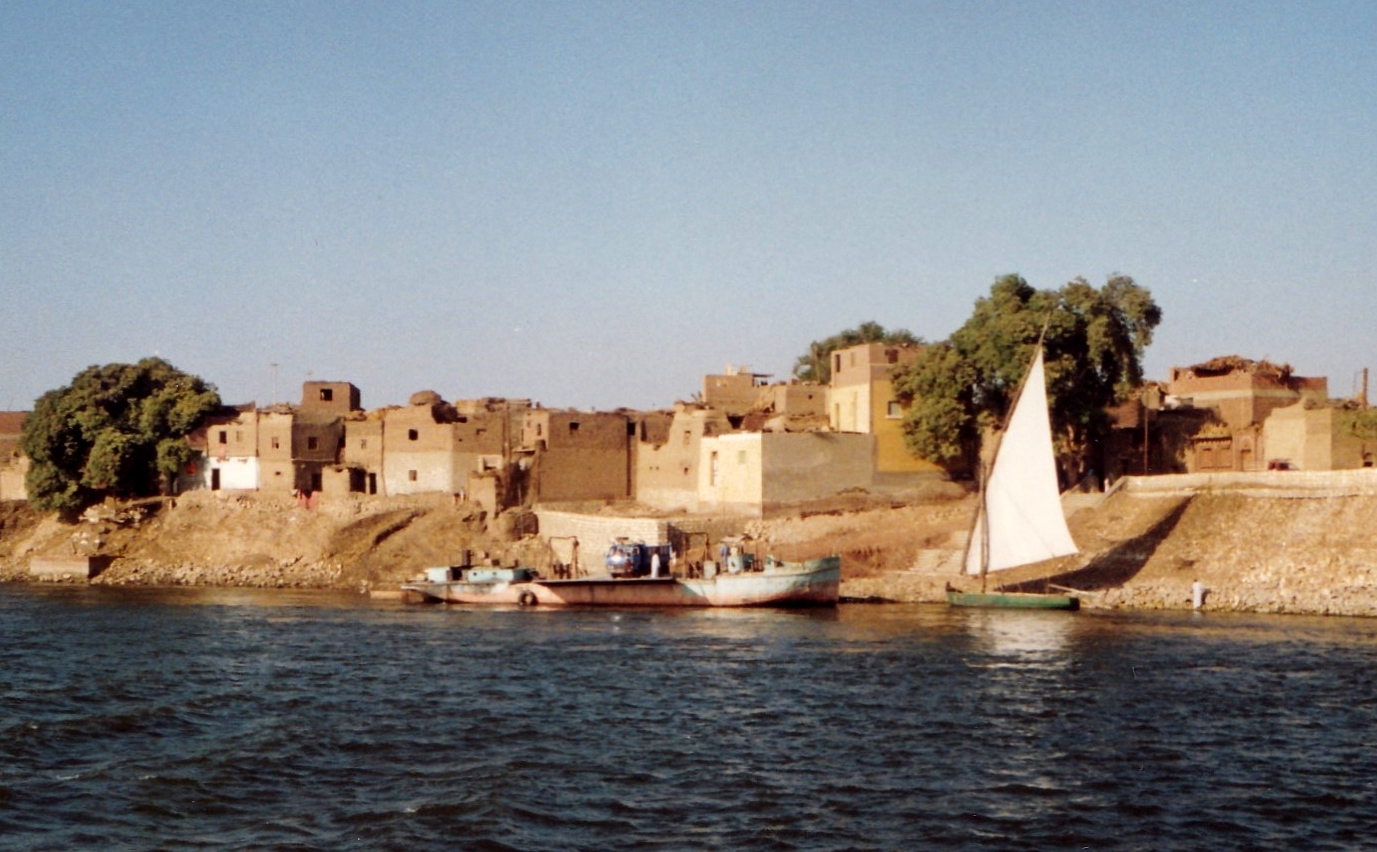
Our next obstacle was a swing bridge.  We moored on the northern side to wait for it to open along with 2 other Nile boats.  The appointed time was 6.00 pm.  And at a few minutes past six, the bridge duly swung open and caused the maximum amount of confusion in the surrounding town, bringing it to a complete standstill for almost an hour.
Our Captain decided to continue sailing as he had been warned that the water level in the river was to be lowered at midnight on the thirtieth.  We still have to negotiate the most difficult lock at Abydos.  It seems we will be sailing for most of the night, eventually docking at about 3.00 am...

There will be more from my Egyptian journal over the coming weeks. If you enjoyed this post you might also enjoy my earlier posts about Cairo Giza Solar Sailing Tell-el-Amarna Assiut and Egypt generally - just click the links.


Tuesday, 23 May 2023

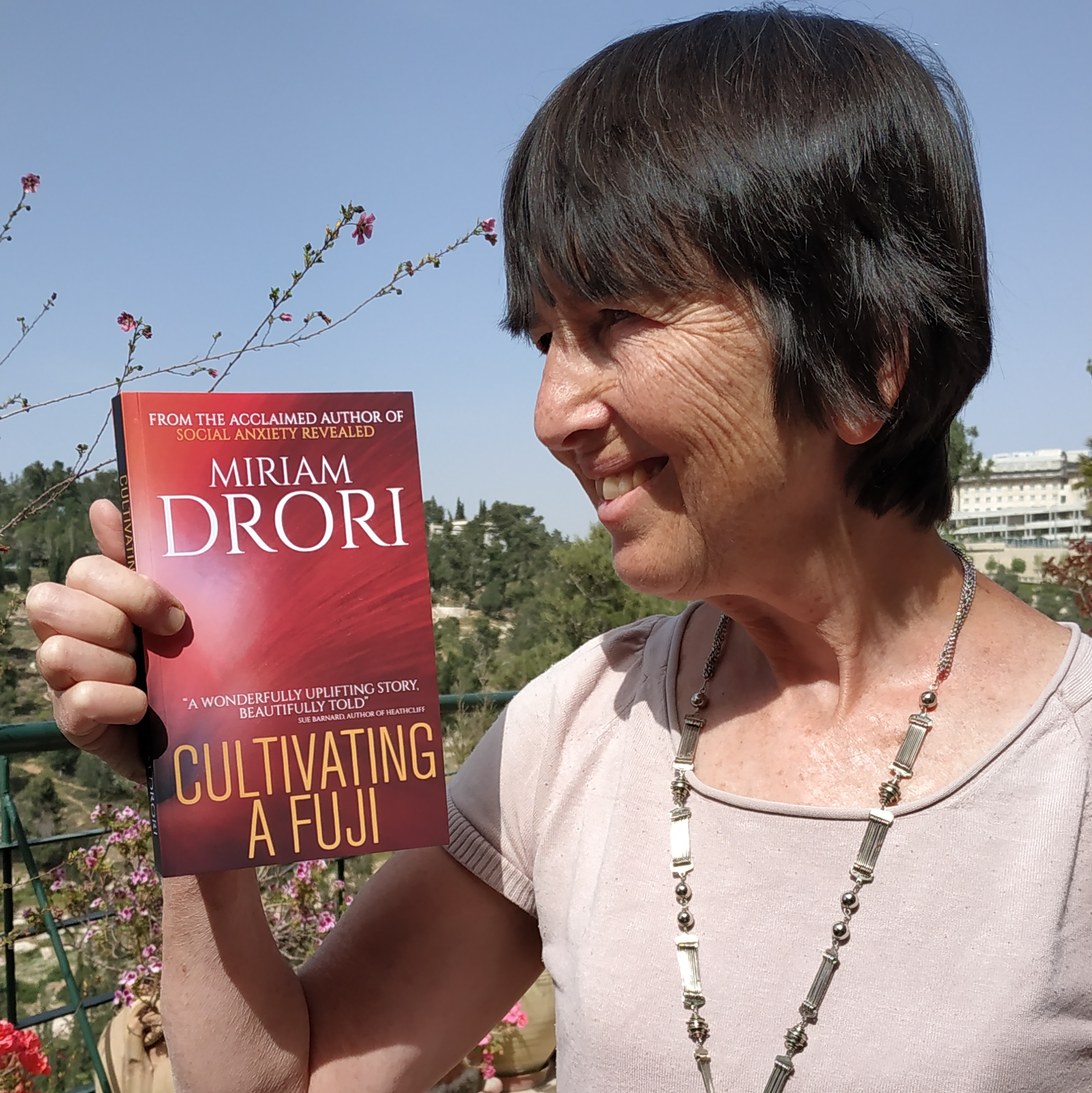
Friend and author, Miriam Drori...

Hengistbury Head, photo by Lee Sherred
... makes a very welcome return to the blog this week.  Hello Miriam, thanks very much 
for being here.  Tell me about the locations in your latest book ...

Cultivating a Fuji (latest edition: January 2023) is the story of a loner and his struggles and successes in life.  It’s set mostly in Bournemouth, a picturesque seaside town on the south coast of England, and partly in London and Japan.
The main character, Martin, grew up in a London suburb and loves living in Bournemouth.  He takes long walks along the coast and regards the sea as a friend – the only one he has.  When he reaches crisis point and considers putting an end to it all, he climbs to the very top of the cliff at Hengistbury Head, having walked all the way there, and gazes down at the sea, way below.
Also in the story, Martin is sent to represent his company in Japan.  He’s supposed to sell their software project and is ill-equipped to do so.  But Japan is poles apart from the West, with features that help him.  The strange and wonderful traditions he witnesses, the inherent shyness of the people he meets, and the fuji apple are some of those.  When he gives his talk to the company, he has to pause after each sentence so that it can be translated and discussed.  This gives him time to recover his wits before he has to deliver the next sentence. Later, he gets drunk on saké, which is more potent than he realises, but the drink helps him to overcome his fears when he’s forced to take part in karaoke.  On a second trip to the country, he visits a deer park and sees, for the first time, that deer are not always timid creatures.
For Martin, London represents an unwanted return to the past.  His memories of the capital, whether from home or from school, are generally unhappy.  On two occasions, at Waterloo Station, he meets up with the past in the form of a particularly nasty former schoolboy.  Martin isn’t one to gloat with schadenfreude, but readers might smile at the turn of events.  The first of the two meetings is coincidental.  The two young men drink coffee in the station and the scene reveals the changes that each has undergone since their school days, one for the better, the other for the worse.  At the second meeting, the two now-middle-aged men venture outside the station, where they stop by the river to watch a street performance that must be a hoax.  The other man, reflecting his own experiences, says, “Everyone plays tricks in some way.”
I’m lucky to have visited many places in the world, including those I’ve mentioned here.  I grew up in London and have paid numerous visits to the city since moving away.  I never lived in Bournemouth, but my parents moved there after I left home and I loved visiting them there.  In 2013, we toured Japan as part of a group.  The wonderful, exciting, packed trip left a lasting impression on me.
about the book … 
Convinced that his imperfect, solitary existence is the best it will ever be, Martin unexpectedly finds himself being sent to represent his company in Japan.  His colleagues think it’s a joke; his bosses are certain he will fail.  What does Martin think?  He simply does what he’s told.  That’s how he’s survived up to now – by hiding his feelings.
Amazingly, in the land of strange rituals, sweet and juicy apples, and too much saké, Martin flourishes and achieves the impossible.  But that’s only the beginning. Keeping up the momentum for change proves futile.  So, too, is a return to what he had before.  Is there a way forward, or should he put an end to the search now?
Gradually, as you’ll see when Martin looks back from near the end of his journey, life improves.  There’s even a woman, Fiona, who brings her own baggage to the relationship, but brightens Martin’s days.  And just when you think there can be no more surprises, another one pops up.
Throughout his life, people have laughed at ‘weirdo’ Martin; and you, as you read, will have plenty of opportunity to laugh, too.  Go ahead, laugh away, but you’ll find that there’s also a serious side to all this…
about the author … Miriam Drori was born and brought up in London and now lives with her husband and one of three grown-up children in Jerusalem.
With a degree in Maths and following careers in computer programming and technical writing, Miriam has been writing creatively since 2004.  After some success with short stories, Miriam turned her hand to longer fictional works, publishing Neither Here Nor There and The Women Friends: Selina, co-written with Emma Rose Millar.
Social anxiety features in Miriam's latest publications.  Social Anxiety Revealed is a non-fiction guide that explores this common but little-known disorder from multiple points of view.  The book has been highly recommended by ‘sufferers’ as well as professionals in this field.  Cultivating a Fuji is the story of a fictional character who battles against social anxiety before learning to make friends with it.  Style and the Solitary, a crime novel, asks an important question: what happens when a suspect can't stick up for himself?
When not writing, Miriam enjoys reading, hiking, dancing and touring.

You can follow Miriam on her Website and on Facebook  Twitter and Insta   

You can get her books from Amazon

Tuesday, 16 May 2023

Meet some of the writers ...

 ... who will be joining me at the Shetland Noir literary festival in June ...

My post on April 18th announced the lit fest in Lerwick.  I was stoked to have been invited, and I still am.  If you missed that particular post, you can read it by clicking the link Here
The festival runs from June 15th to 18th and begins with a reception on Thursday evening at the Mareel in Lerwick.  There will be a welcome by Ann Cleeves, and following that, there will be music, too.
Friday - the first full day of the festival -  is brimming with all kinds of events and kicks off with Speed Dating Crime Writer Style!  This is a chance for you to briefly meet attending writers.  There will be conversations with Martin Edwards, Val McDermid and Carole Johnstone, along with a writing workshop, a talk and two author panels.  Saturday follows in the same vane with conversations with Elly Griffiths and Richard Osman, interspersed by workshops and panels.
But Sunday is the day I want to feature.  Following a conversation with Dr James Greive, a forensic pathologist, comes a panel entitled 'Not So Noir.'  Today, I am pleased to be able to introduce you to my fellow panellists.  Read on ...


Merrilee Robson’s short stories have appeared in Ellery Queen Mystery Magazine, Alfred Hitchcock Mystery Magazine, the People’s Friend, Mystery Magazine, and many other magazines and anthologies.  Her traditional mystery, 
Murder is Uncooperative, is set in a non-profit housing co-op.  Merrilee is a former vice president of Sisters in Crime – Canada West and a former director of Crime Writers of Canada.  She has served three years on the Vancouver Police Board, which provides civilian oversight to the Vancouver Police Department.  She lives in Vancouver and spends a lot of time with at least one cat on her lap.

You can follow Merrilee on her Website on Twitter and you can get her books on Amazon


I'm Jonathan Whitelaw and I write cosy crime novels set in the Lake District.  I started my career as a media officer in the Scottish Parliament before becoming a full-time journalist.  For 12 years I covered everything from breaking news, sports, music, the arts and culture and even the Olympics of Radioactive Waste (it's a long story).  My debut novel was released in 2015 and I"ve not looked back since.  My family and I moved to Alberta in 2022 but I'm still back and forth across The Pond.  My latest novel - The Village Hall Vendetta - is the follow-up to The Bingo Hall Detectives. It follows a mother and son-in-law amateur detective duo who solve scurrilous murders and mayhem in and around Penrith. 


You can follow Jonathan on Facebook Twitter and on Instagram and you can get his books on Amazon

The 'Not So Noir' panel will be managed by Dr Jacky Collins (Dr Noir), who describes herself as a film-loving, crime-reading adventurer.  It will be Jacky who makes sure our discussion keeps on subject.  
The rest of the day will include a conversation with Shona Maclean, workshops and more author panels.  I am so looking forward to being a minuscule part of this awfully big adventure!

Full details and tickets are available Here


Tuesday, 9 May 2023

I'm reviewing Clouds over Paris...

... by Felix Hartlaub.

Felix Hartlaub was born in 1913 in the city of Bremen. His father, Gustav, was a museum director and art historian who was the son of a merchant family. Gustav studied with Franz Wickhoff in Vienna, Heinrich Wölfflin, a Swiss art historian, in Berlin and worked with Fritz Wichert, a German art historian and principal director at the Mannhiem Art Gallery.  Wichert encouraged Gustav to move his family to Mannheim in 1914.
In 1923 Gustav became director of the Mannheim Gallery/Museum and took a particular interest in Expressionism as a school of art.  Felix was educated and grew up in the city and remained there until, at the age of 15, he began to study at Odenwald, a privately funded boarding school in Heppenheim.
At the age of 19, in 1932, Felix returned to his home town of Mannheim to study at the commercial college and then followed this with a period of study in Romance languages and history at Heidelberg University.
In 1933, his father was dismissed from his post at the gallery as part of the spread of Nationalist Socialist policies within Germany at that time.  Effectively, this made the family pariahs within their community, his father being labelled a ‘cultural Bolshevik.’
Felix went on to study in Berlin and received his doctorate in philosophy in 1939 – a most significant year in Europe for anyone alive at the time.  Within weeks of completing his studies, Felix was drafted into the Wehrmacht and from September 1939 to November 1940, he was part of a barrage balloon unit.
Perhaps in December 1940, his skills were recognised because he was assigned to the Historical Archives Commission on secondment.  This unit examined files looted in Paris.  He did serve again for a short time as a soldier, but the bulk of his time between 1940 to 1945 was spent working as a historical clerk at the Wehrmacht High Command, editing War Diaries and at the Führer’s headquarters in Winniza, Rastenberg and Berchtesgaden along with a period spent in occupied Paris.  This period of Hartlaub’s life is captured in Clouds Over Paris. It is not a narrative nor a day-by-day memoir, but it is a set of observations and notes about what Hartlaub witnessed, talked about and understood from his time in the city.
The language of his writings is lyrical and brings to life the city’s colour, sights and sounds in its darkest period in modern history.  There’s an initial naivety about his role and presence that comes across clearly, and I was left wondering to what extent – if any at all – he openly questioned the occupation.  What is abundantly obvious is that the naivety soon dissipated. Towards the end of the war, his notes become darker and more heavily tainted with despair and disbelief.
In April 1945 – just weeks before the armistice – Hartlaub was posted to an Infantry Unit on the front near Berlin.   He was listed as missing in May 1945, and from then on, nothing is known about his whereabouts.  He was formally declared dead in 1955, with the date of his death being accepted as December 31st, 1945.
He published little within his lifetime, but the scraps of notes and observations that still exist are a testament to a writer who might have achieved much had he survived.  His keen insights and eye for detail might have given us, here in the 21st century, a compellingly different story of the 1939/45 conflict.

Tuesday, 2 May 2023

Come stroll with me …

… through the old town of Cordes-sur-Ciel. It has a fascinating history and a scrumptious place to visit …

I’m camped in Villefranche-de-Rouergue and taking the D922 out of town and south to Cordes.  As I pass Najac and Languépie, I have to stop to snatch a pic or two of the ruins of the old fortifications on each promontory.  And there will be more from those locations in later posts.

The road sits in the valley bottom, so as you draw closer to Cordes, the old fortified town seems to rise out of the ground.  The place seems to float on the clouds when there’s an early morning mist in the valley.  Hence the name, which translates literally as ‘ropes in the sky’.  The town’s original name was just Cordes, derived from the ancient word ‘corte’, meaning rocky heights.  In 1993 the name was officially changed, and sur-Ciel was added.  As you drive towards the location, you can see instantly how well the revised name fits.

Built as a bastide in the thirteenth century, the town received its charter in 1222 from the then Count of Toulouse.  It is widely believed to be one of the oldest bastides in southwest France.  It was also part of a regeneration project following the Albigensian Crusade.  The Crusade, instigated by Pope Innocent 3, was an attempt to annihilate the Cathars, a religious community that had broken away from Catholicism and considered to be heretic.  As a period of French history, the rise and fall of the Cathars is a massive subject and far too big to include here fully.  But I can recommend The Yellow Cross by René Weis if you want to read more.  Perhaps it is a subject that I will return to in future posts.

The gates of the old town are a climb from the surrounding modern suburbs.  But well worth the effort for the views across the valley.  The town took seven years to build and was populated by people displaced by the destruction wreaked by the Cathar Crusades.  The new town replaced the village of Saint-Marcel, which was raised to the ground by the troops of Simon de Montfort.

Cordes prospered until the fifteenth century when it was pillaged during the Hundred Year’s War – a long-lasting series of skirmishes – and escaped damage during the religious wars at the end of the sixteenth century. This little town survived, and today, you can find some marvellous examples of properties from the 13th, 14th, and 15th centuries. Check out the La Maison Prunet with its arched gothic windows.
Grand Rue Raimond 7 takes you right through the ancient heart of the place from Porte de Rous to Porte des Ormeaux.  This road will take you past one side of the old market place - see pic to the left - which still hosts a substantial market at the weekend. The street will also take you to the Musée des Arts du Sucre et du Chocolat.  A whole museum dedicated to chocolate and sugar work!!!!  What is there not to like about that?  And yes, I did visit.  How could I not?


If you enjoyed this post you might also be interested in my meanders through Chenonceaux  Blois  Ancy-le-Franc Tanlay and Lapalisse

Tuesday, 25 April 2023

I'm very pleased to welcome, friend and author, Gary Kruse ...

...to the blog today.  Hi, Gary and thanks for making time in your busy schedule to be here.  So, tell me, w
hat is your current release?

GK  My new release is a supernatural mystery called Bleak Waters.
When the story opens, we meet Lily West, a young woman who is grieving her father’s suicide the previous summer.  Plagued by questions over why her seemingly happy, loving father took his own life, and by dark fears about how well she really knew her father, Lily finds a distraction in the arrival of Theo Sinclair.
Theo has come to Lily’s village on the Norfolk Broads searching for answers to an older mystery; the disappearance of Claire Baldwin twenty-five years earlier. Theo’s arrival stirs Lily’s long-buried ability to see the dead, and the deeper Theo and Lily dig, the stronger the visions get.
But it’s not just the dead that are awakening as hidden secrets are revealed and lies uncovered.  As the warnings of the villagers turn to threats, and then to violence, Lily is forced to choose what’s more important; protecting the father she loves, or finding the truth?
It’s out on Kindle and Kindle Unlimited now, with a paperback release due for summer 2023.
Plus, for keen-eyed readers, there’s also a Badlands easter egg hidden in the story.
AW   What first got you into writing and why?
GK  I’d always dabbled in writing stories since I was a child, but I started writing seriously after I saw the teen-horror film The Craft in the cinema when I was seventeen.  I’d seen the vampire film The Lost Boys a few weeks earlier, and when I came out of the cinema I started thinking about what would happen if the witches from The Craft met the Lost Boys and from there I started writing the stories that would make up my first novel, Blessed Be.
Funnily enough, my writing career has pretty much come full circle at this point because Trinity, my current work-in-progress is essentially a witches vs vampires tale, albeit a lot darker than Blessed Be ever was.
AW  You write dark thriller and horror stories.  Is it all imagination or do you do research?
It’s a mix of everything.  I’m very inspired by place; Badlands was inspired by the coastline around St. Agnes in North Cornwall while Bleak Waters was inspired by the area around Hickling and Potter Heigham on the Norfolk Broads.
With place, I tend to ask who might live in these places and what the existing conflicts may be.  But I also like the idea of strangers arriving in these places, so then I have to figure out the stranger’s motivation and who would have the most to lose from their arrival and the stories develop from there.
Then, if I come across interesting bits of folk lore (for example wrecker’s tunnels in Cornwall for Badlands, ghosts in the Norfolk Broads for Bleak Waters, Eastern European vampire mythology and witchcraft for Trinity, I try to weave those into the story too.
AW
 What about other types of writing?  Have you dabbled with other genres of other forms of media - short stories/film/theatre/radio?
GK I’ve written flash fiction and short stories, and was fortunate enough to win the November 2021 edition of the Writer’s Forum magazine short story competition with my short story, Hope in the Dark.
AW  Famous authors such as Roald Dahl and Dylan Thomas had a special space for writing.  Do you have a writing shed of your own?
GK  I’ve got a corner in my loft that is technically a writing area, but I hardly ever write there because most of my writing is done in local libraries, coffee shops and even the café in the local theatre during the lunch break from my day job.  I used to write on my commute on my mobile phone, but I work more locally these days so it’s all done on the laptop.
AW   And finally, what would your eight-year-old self think, and say about you and your achievements today?
GK  I think they’d be thrilled to see not one but TWO books out with their (my) name on them! When I was at primary school, we did a project where we had to write our own book and design a cover.  It had to be three chapters long, have a beginning, middle and end and was bound in card with treasury tags, with a cover image stuck on the front and a blurb on the back.  Best school project ever! Mine was a mystery about a yellow caravan.  I can’t remember the details, but I was reading a lot of Secret Seven books at that point so it would’ve had kids saving the day.
 
about the author … Gary Kruse is a writer of thriller and horror fiction about people on the edge of society struggling to find who they are, where they come from and where they’re going.  He has won and been shortlisted for several short story competitions and his debut dark thriller novel, Badlands, is an Amazon bestseller.
about the book … In the depths of winter, Theo Sinclair arrives in the Norfolk Broads
searching for answers to a twenty-five-year mystery; the disappearance of Claire Baldwin.

For Lily West, Theo’s arrival is a welcome distraction from her grief and the questions she still has over her father’s suicide the previous summer.
For others in her village, Theo’s arrival is a threat.
As lies are uncovered and long buried secrets dragged back into the light, Lily, now haunted by ghostly visions, starts to realise that Claire’s disappearance might be linked to her father’s suicide.
When the warnings and threats of the villagers turn to attempted murder, Lily has to decide what’s more important; protecting the people she loves…
…or uncovering the truth.
 
You can get the book Amazon and you can follow Gary on his page on Link Tree

Tuesday, 18 April 2023

I am honoured to be able to announce ...

… that I am one of the authors taking part in the Shetland Noir 2023 literary festival.  Read on for more info …

A brief conversation with a fellow writer whilst in Torquay last year included some scant details about a literary festival in Scotland.  It sounded intriguing and I said I was interested.  And now, almost 12 months later, I am very pleased to be able to say that, not only will I be there, but, I am part of a panel of authors discussing and answering questions about cosy crime.
It is an outcome I never really expected to come to fruition.  As the names of the headline authors who are attending were gradually released, I became convinced that my name – well, it does begin with W – had dropped off the end of the list.  And that is not so unusual.  I’ve dropped off the end of lists of students at school, employees at work and bookings for restaurants.  Dropping off pages or lists is something that comes with the territory of having a name that tentatively clings to the very end of the alphabet.  So, having the great honour of being included in this event is very much a first for me.
The location is also an unknown.  Whilst I’m well-travelled in Europe, France in particular, and one or two other more southerly locations, Shetland is new territory.  As one of the many Scottish islands, Shetland is a first.
Geographically it sits on a northing of 60.15 degrees.  That’s a whole 6.41 lines of latitude further north of my home in Yorkshire.  Whilst I have been to Aberdeen and the northeastern coast of Scotland in the past, this adventure will take me closer to the North Pole than I have ever travelled before.  Yet another first.
My usual attire for June is shorts, tee shirts, and flip flops with a cagoule thrown in for sudden downpours and those odd thunderstorms that can ruin the vines in France.  This year, I will be packing jumpers, jeans and walking boots.  That’s a very definite first for June!
My fellow panellists – Merrilee Robson, Jonathan Whitelaw and Dr Jacky Collins are all writers/people I have never met before.  Hmm, when I actually meet up with them, will that count as one composite first or three more individual firsts?
As for the whole event, well, everything happens between June 15th and 18th in Lerwick in the Mareel Arts Centre in the heart of town.  You can buy tickets for any number of events, author panels, workshops, talks, and author interviews throughout the four days.  The event for myself, Jacky, Jonathan and Merrilee is at 11.30 on Sunday June 18th.  We will be chatting and answering questions about all things 'Not quite so Noir'.  Check out the links below.
And if you’re counting firsts on my behalf, it’s either 4 or 7.  I prefer 7!

You can get tickets over the phone on 01595 745500 or online at www.shetlandarts.org

You can check out and download the programme for the whole weekend Here

You can read more about Merrilee, Jonathan and Jacky Here.