Tuesday, 13 September 2022

I'm reviewing Hymn to Equity...

 ...a fabulous new collection of poetry, dedicated to Wordsworth and written by Aria Ligi...

I'm very privileged to have received an arc copy of this collection of poetry for me to read and review.  Any views expressed here are solely my own.

Aria has visited my blog before, and you can read that earlier post Here.

Hymn to Equity is Aria Ligi’s tribute to the life and work of William Wordsworth - the greatest Romantic poet, in my humble opinion.  I’ve recited many of his verses, and I studied his work for exams.  I still have my books of his poetry on my bookshelves, and I do refer to them from time to time.  So, to be asked to provide this review is a great honour.

Practicalities first.  This is not a slim volume of work.  There are 120 poems to be read and pondered over.  And I have certainly taken my time over them all.  Helpfully, Aria has divided the complete volume into 12 sections of 10 poems each – so it is easy to dip in and out of the book as and when you wish.  Along with the words are some stunning pieces of art at the beginning of each individual section.  I was provided with an arc for this review, but rest assured, this book is so beautifully put together that I will be buying an actual print copy when it is available.  In addition, Aria includes details from Wordsworth’s life.

In each section of the book, a particular aspect of Wordsworth's life is considered in poetry.  Aria often taking on the voice of one of the key people within his circle or speaking through the persona of the poet himself.  These poems cover loss, love, relationships and many other aspects of human existence between birth and the grave.  In that respect, this volume of verse is deeply thought-provoking and questioning.  There were many times when I found myself re-reading a verse or two only to be lost in the thoughts created in my mind by the words and the imagery used.  Throughout, there are poems for and about those precious to him – his sister, his wife, his other siblings, and his fellow writers.  As with Aria’s previous volume of poetry reviewed on this blog, the language is a joy to read and the vocabulary extensive.

It’s hard to imagine an exploration of Romantic poetry without Wordsworth being a focal point.  It is also difficult to confine Romantic poetry to Wordsworth only.  Luckily, I can tell you that Hymn to Equity is just the very first book in a number of volumes entitled the Romantic Series.  Aria intends to add more volumes which will feature other poets such as Blake, Keats, Lamb, Byron, and Coleridge, to name but a few.  I am particularly looking forward to all of those future books, and I can thoroughly recommend Hymn to Equity as an excellent starting point. 

You can follow Aria on her Amazon Page, where you can find Hymn to Equity as soon as it is released.

Tuesday, 6 September 2022

I'm very pleased to be able to reveal...

 ... the cover of the second collection of stories from the Seasonal Collective. And yes, that does mean another book is on the way...


Round about this time last year, I introduced a new anthology of stories - Autumn Paths.  In the months that followed, some of my fellow writers from the Seasonal Collective appeared on the blog to tell the story behind their story in that first collection. And you can check out those posts Here  Here  Here  and  Here

Way back, when I was first approached and asked if I was interested in contributing a story, I had no idea that I would be doing so again for a second book.  But here I am, still slinging words together in the hope that they might make sense to someone somewhere.

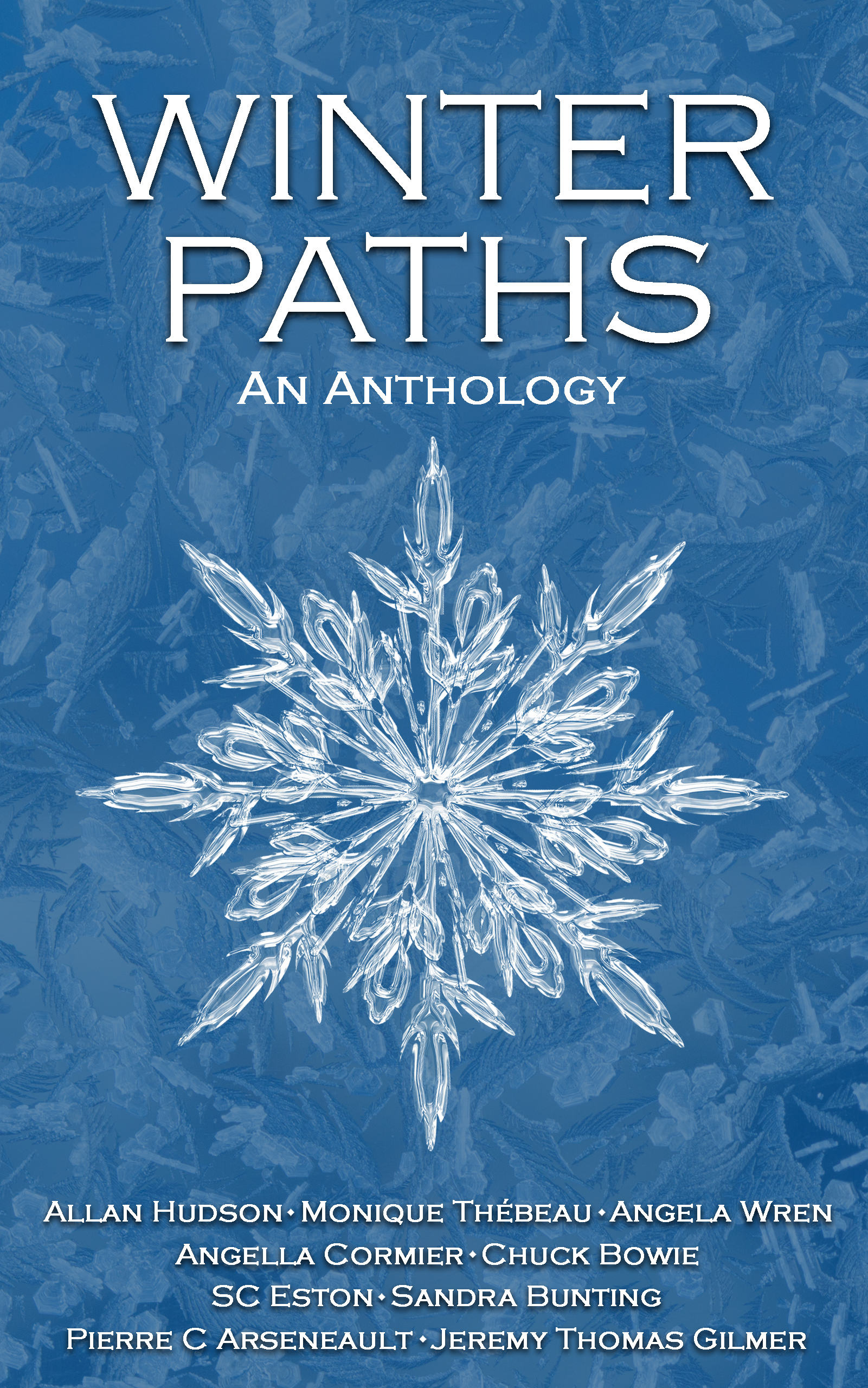
The follow-up anthology to Autumn Paths is Winter Paths. We have a brilliant cover - see below left.  The stories are all finished and edited.  We have a blurb for the back, and we are almost ready to go to print.

As for my story, well, France is a feature, of course.  There's a bit of mystery in it, too - and why wouldn't there be?. And it's a story about family, secrets and lies.  I can't say much more than that at the moment, sorry.  But do look out for another post once the book is launched.


about the book... 
Nine writers - Seasonal Collective - from both sides of the Atlantic, including best-selling and award-winning authors, have created a second miscellany of stories.

From the frozen north, across continents, space and time, these stories will mystify, enlighten, intrigue and perhaps bring a tear to the eye. With a linking theme of winter - in all its guises - experience the warmth of friendly hearts, find companionship and place, encounter battles, uncover secrets, meet ghosts and witness the strength of maternal love.

There’s a story for everyone in this thrilling new collection.

The authors are :  

Allan Hudson, Monique Thébeau, Chuck Bowie
Yours truly, S C Eston, Angella Cormier
Pierre C Arseneault, Sandra Bunting, Jeremy Thomas Gilmer

Tuesday, 30 August 2022

I'm Off My Beaten Track Solar sailing...

... today.  Yes, I know that sounds odd, but read on.  Through my journal, I'm revisiting the museum at Giza that houses the ancient Solar boats used by the pharaohs in the afterlife...

SOLAR SAILING 

...next to the pyramid of Cheops is a strange-shaped modern building that houses the Solar Boats.  It neither toned nor blended with the scenery or nearby ancient buildings.  I was reminded of something the Prince of Wales said.  The substantial modern construction in front of me really did fit the description 'monstrous carbuncle'.  A bit like the oversized shed that one's neighbour builds in the back garden.  You know it's awful but dare not say so, and at the same time, you hate your neighbour for making you look over the fence at something so ugly.
On entering the 'boathouse', we were all given soft overshoes to put on.  They made my feet look as though I had on size eleven monster slippers!  I wasn't impressed, but I coped.
The museum was built over the actual location where the solar boats were discovered.  In total, there were six, all buried in kit form - they must have had Ikea in ancient times, too, I thought!
I kind of lagged behind everyone else as I stared at the stunning shape of the boat.  In length, it is 43 metres (141 feet) and 8 metres (26 feet) high.  The hull curves upwards from the central section, rising to elegant posts, both at the stern and the prow.  Made of Cedarwood imported from Lebanon, the boat was constructed and shaped and then dismantled again to enable it to be buried for use in the Afterworld.  It was assumed that the Pharoah would have lots of servants to rebuild the boat so that he could continue his journey.  At 4500 years old, it looked to me as though it could have been built yesterday... 
...back onto the coach and a short ride to the Sphinx with a stop in the middle of the desert to take a few long shots of the pyramids and hopefully purchase a scarab or two - 'very cheap price' - from the nearby vendors.
Some of my Fellow Travellers didn't get out to look for themselves.  I could not understand this, and I know a photograph can never replace the experience of the sight itself and never will.  But it can invoke long-forgotten memories.  Naturally, I looked for myself.  In front of me were monuments that were between three and five thousand years old, and when I turned to my right, I could see electricity pylons striding across the sand, asserting their possession of the current century.
A more easily photographed model of a Solar Boat
It was when I looked back to the pyramids sitting in amongst the sand of the western desert that I suddenly realised how wrong I had been about this landscape.  T
he desert is so much more than a vast expanse of sand.  It has contours and a myriad of colours.  It changes with the light and the wind.  As I gazed across the vista, I realised that no other individual on any other day would see the desert as it presented itself there and in that moment.  
I reached for the camera but changed my mind. Some realisations are awesome, and you just can't photograph that...


You can read more excerpts from my Egyptian Journal on September 27th.

You can read my thoughts on Cairo and Giza by clicking each name.


Tuesday, 23 August 2022

I'm reviewing Hunter's Chase...

 ...by fellow author Val Penny...

First published about five years ago, the current version has a new and darkly intriguing cover.  This is the first book in a set of gritty police procedurals.  There are currently six books in the Detective Inspector Hunter Wilson Crime Thriller series, which are all set in the city of Edinburgh.  So, if you haven't come across them yet, there are plenty of books to keep your reading needs satisfied.

Hunter's Chase begins with a theft that is interrupted by the home owner, who happens to be a Minister of State.  The thief takes flight, and the minister gives chase.  But the thief then trips over the partially buried body of a woman, and the whole story carries on from there - one twist leading to another very different turn before you've had time to think about it.

The story is told using multiple points of view.  And, yes, I know, that's something of a marmite thing - you either love it or you hate it.  I don't mind different points of view, both as a writer and a reader.  As a writer, it gives you the opportunity to get inside the head of more characters, which is always exciting.  As a reader, it enables you to have a much deeper understanding of the characters and how and why they react as they do.

There are numerous plotlines in this book and Val does an excellent job of weaving everything into a carefully interlinked whole with a satisfying ending.  The pace is fast, and the twists and turns will keep you turning the page.

I liked the way Val developed her characters, and I found the narrative voice flowed easily.  I thought there was a great sense of place, and, for me personally, it was good to feel that I was walking those streets along with DI Wilson and his team.  The story kept me interested right to the end, and I have no hesitation in recommending this series.  If you like your police dramas hard-hitting, then these are the books for you!

about the author...  It is with great delight that Val Penny has accepted a ten-book deal with Spellbound Books.
Val Penny has an Llb degree from the University of Edinburgh and her MSc from Napier University.  She has had many jobs, including hairdresser, waitress, banker, azalea farmer and lecturer but has not yet achieved either of her childhood dreams of being a ballerina or owning a candy store.
Until those dreams come true, she has turned her hand to writing poetry, short stories, nonfiction, and novels.
Val is an American author living in SW Scotland.  She has two adult daughters, of whom she is justly proud and lives with her husband and their cat. 

You can get the Hunter's Chase, along with all of Val's other books, on Amazon

You can follow Val on her Website on Facebook  Twitter  Bookbub and on Goodreads

Tuesday, 16 August 2022

Friend and author, PJ McIlvaine...

...joins me on the blog today.  Hi PJ, thanks so much for being here.  I believe you have a new novel out and it has its roots in history, so I'm hooked already!  But please tell me more...

PJ  I’ve always had a fascination with the past.  As a kid, I devoured tomes about Victorian England, the Tudors, and the Plantagenets as if they were candy.  I loved reading about royalty, the rich upper crust, and the poor and oppressed.  But it wasn’t until I began researching the kernel of what would eventually become my debut middle-grade novel, Violet Yorke, Gilded Girl: Ghosts in the Closet about a poor little rich girl in 1912 Manhattan who sees ghosts, that I realized that the states had its own version of the Wars of Roses.  Not as bloody, perhaps, but just as lethal and effective.
In America, Manhattan was the epicenter of the Gilded Age, a time of intoxicating new, progressive ideas.  Things were changing.  Well, not everything, and not fast enough for some.  If you were rich, you were really, really rich.  On Wall Street, fortunes were made and lost.  Obscene mansions built by the nouveau riche sprouted like weeds.
The Four Hundred, so-called as reportedly ‘there were only 400 hundred people in fashionable New York Society’, was run with an iron glove by Mrs Caroline Schermerhorn Astor, the wife of businessman William Backhouse Astor Jr.  A prominent socialite, Mrs Astor was determined, along with the help of confidants and cohorts, to uphold the stringent standards of etiquette and behavior of old money and tradition against a swarm of threatening arrivistes.  A word, a nod, a wink, a look, or a whisper from Mrs Astor and her powerful friends could banish people from polite society in an instant.
Luckily for my poor little rich girl Violet, who was orphaned as a toddler when her parents were killed in a ‘random’ robbery, her grandmother was one of Mrs Astor’s best friends and firmly entrenched in the Four Hundred hierarchy.  Violet was expected to fulfill her duty as a member in good standing: to be obedient, compliant, and in time, make a good match.  That Violet had no intention of doing any of these things, well, that’s another story entirely.

about the book…
She sees ghosts…but are they malevolent or friendly?
Poor little rich girl Violet Yorke has seen ghosts for as long as she can remember, but no one believes her.
Not stodgy Grandmother, who took charge of the heiress after her parents were killed in a failed robbery. Nor kind-hearted Aunt Nanette, or Uncle Bertie, a charming rogue.  Not even the patient Hugo Hewitt, Violet’s godfather and trustee of her vast fortune.
Everyone dismissed the child’s insistence about ghosts as a harmless eccentricity—until the night her bedroom caught fire.  Violet was promptly sent overseas, fuelling her anger and resentment.
Two years later, a rebellious twelve-year-old Violet is on her way back to Manhattan on the doomed Titanic.  As the ship sinks into the deep Atlantic Ocean, she’s put in a lifeboat by an apparition who rescued her from the clutches of a jewel thief.  Presumed lost at sea, Violet shocks everyone by crashing her own funeral.
Following Violet’s recovery, Grandmother has grand high society designs for the girl, but Violet has other ideas.  She’s determined to uncover the secret of what really happened to her parents.  Then there’s the mystery of the moon-faced boy at gloomy Dunham Hall and his connection to the ghost on Titanic.  Also hot on Violet’s trail is the jewel thief, the specter of her murdered governess, and a vengeful ghost lurking in Violet’s childhood home.
Being a poor little rich girl in 1912 Gotham isn’t all it’s cracked up to be in this delightfully dark and droll supernatural historical fantasy.

You can get the book on  Amazon

You can follow PJ on her  Website  on  Facebook  Twitter  and on  Instagram

Tuesday, 9 August 2022

An important difference...

... author and friend, Henry Corrigan, visits the bog this week.  Thanks for being here Henry and this space is all yours...

Words such as bleak and oppressive are kind of like kissing cousins. While they might not be directly related, they know each other well enough to have been intimately acquainted on more than one occasion. The reason for this is that bleak tends to describe one’s outlook on a situation, be it cheerless and exceedingly dark. Whereas oppressive tends to describe the situation itself, as something that’s difficult to endure. Given their closeness, it can be easy to assume that the words are interchangeable, and in some cases, they are. But in most cases, and especially fiction, the difference between them is overwhelmingly important, which is a lesson I was forced to learn early on when writing A Man in Pieces.
Earlier today, I was lucky enough to receive a wonderful review from Readers Favorite, and while I’ve read it at least a dozen times, one line still stands out. The reviewer said she “felt enamored by the sweet and heart-warming love” between two of my characters, which is a funny thing for me to consider because there was absolutely nothing sweet or heart-warming in the original version of my novel.
Not long after I finished the first draft, I sent the book out to a number of beta readers and they all said the same thing. They said it was beautiful, but oppressive. There was no break from the unrelenting darkness, it was like being hit over the head with nihilism.
And while I was disappointed by their reactions, (this book was based on my nightmares after all, darkness was what I was going for) it didn’t take me long to realize that they were right. A Man in Pieces was nothing but one bad thing after another. There was no light to be found.
All the things my readers have been enamored with since, the warmth and tenderness, the life and humor, were all things I went back and added in because just like a rollercoaster, it’s the ups which make the downs that much more thrilling. By bringing in the light, I was able to make the darkness hurt that much more.
The difference between bleak and oppressive is as important as the difference between ‘I can’t’ and ‘I can’t stop.’ It’s what prevents a reader from walking away and keeps them thinking about your book long after it ends. A Man in Pieces is bleak, make no mistake. I knew going into this it wouldn’t be for everyone. But much like Edward Van Sloan said shortly after the opening credits of Frankenstein, it would be unkind to present this story without just a word of friendly warning.
There is light here. It is a story about average men with average jobs, struggling to survive and you will find life and warmth and romance and a couple of laugh-your-ass-off moments. But there is also something else here too. And I think you will love how much it hurts you in the end.

about the author…
Henry Corrigan is a bisexual, omnivore author, poet and playwright who writes every kind of story. Whether it’s horror or science fiction, erotica or poetry, high fantasy or children’s books, he writes it all because every story matters to him. They’re what keeps him going. Always an avid reader, Henry started writing poetry in middle school but it wasn’t until he started writing erotica in high school that he really learned the mechanics of writing. What started out as private stories and love letters, soon became publications in anthologies.
To date, he has the rough drafts of two science fiction books, one horror novella, one play, four children’s books, numerous poems and several song lyrics waiting in the wings. Above all, he wants to be known for not staying where he’s been put. To always surprise people, especially himself. Because that’s what makes it fun. The feeling that even he doesn’t know what he’s going to do next.
about the book… Mike Harper would like nothing more than to burn his dead-end job to the ground. But with a wife on bed rest and a son on the way, discovering that the company is downsizing couldn’t come at a worse time. Now, struggling to stay afloat, Mike is forced to fight for the last remaining spot to secure his family’s future. It’s too bad that Tom, his obnoxious boss, is in the same boat.
Tom Downes is a man with few friends and even fewer prospects, but the aging veteran has never gone down without a fight. Now , with his health failing and his marriage falling apart, Tom is willing to do whatever it takes to keep his job.
With a blinding snowstorm closing in, these two desperate men will battle each other on a long and twisted road fraught with heartbreaking losses – and murder.
For when it comes to staying afloat, the American Dream can break anyone…

You can get the book Here

You can follow Henry on his Website on Medium  Amazon Twitter  Facebook and on his Blog


Tuesday, 2 August 2022

Please welcome fellow writer, Sheunesu Kasiamhuru....

...to my blog this week. Hello Sheunesu and thanks for making time in your busy schedule to be here today.  I understand you have a new book out about leadership. So tell me more...

Do you ever feel like you don’t know how to be a great leader?

In Sheunesu E Kasiamhuru leadership book The Art of Decisiveness, we are taken on a blast to the past to learn key skills from the Age of Enlightenment through modern greats in order to move towards a brighter future. From the world of theory and philosophy, we will learn the practical applications to help support individuals and businesses on their quests for success in this ever-changing landscape.

The Art of Decisiveness embraces the pillars of belief, health, attention to detail, unity of purpose, first impressions, perception, initiative, merit, and legacy. Through studying the history of great leaders such as Napoleon, Sir Isaac Newton, and modern-day giant Kobe Bryant, the author places us alongside these greats as they discover what it takes to become decisive thought leaders and thinkers. This book urges readers to get off the couch onto the field and then into the boardrooms where decisions are made.

about the author...
Sheunesu E Kasiamhuru-Mutembwa is a Zimbabwean entrepreneur, writer, and a FIFA accredited soccer coach who is a graduate of the University of Pretoria in the discipline of sports management. In addition to this Sheunesu also worked as a field manager for a joint research survey in Zimbabwe organized by the American University and the University of California Davis in 2018. Having sampled many diverse cultures in his numerous travels after his high school education at St Georges College Zimbabwe, Sheunesu combines those experiences with his love for history in his debut philosophy book.

The Art of Decisiveness provides insights into the traits and principles of decisive leadership. He believes in looking back in time to help solve the issues that lay ahead. He loves to travel, hike, climb mountains and support his favorite teams which are Real Madrid, Arsenal, the Los Angeles Lakers and the New Zealand All Blacks. 

You can read an extract from Sheunesu's book here Here and you can get the book on Amazon 

You can follow Sheunesu on his Amazon Author Page on Facebook and on Instagram