Tuesday, 31 October 2017

Please welcome friend and author...

Nicola Slade to my blog today.  Thanks for being here, Nicola and I know how busy you are so tell me a bit about your latest book...
NS It's a contemporary romantic novel interspersed with historical interludes so that the reader, though not the protagonist, learns the story of the ancient house and the family.  It’s not exactly dual timeline because there are glimpses of several eras, and true to my mystery writing career, murder does raise its ugly head, though only in the historical past – no need for detective work!  Here's the blurb...

A hare carved in stone and the scent of flowers in a house full of echoes – can Freya’s inheritance help her to leave the past behind?
Had I gone completely crazy that first day? To open the door, take one astonished look round, and decide on the spot that I would live there?
To fall in love with a house?’
When Freya Gibson inherits an old, run-down property she has no idea she is the last in a long line of redoubtable women, including the Tudor nun who built the house.  Unknown to Freya these women, over centuries, fought with whatever weapons came to hand – deception, endurance, even murder – to preserve their home and family.
Freya falls in love with the house but her inheritance includes an enigmatic letter telling her to ‘restore the balance’ of the Lady’s Well.  Besides this, the house seems to be haunted by the scent of flowers.
In the past the Lady’s Well was a place of healing and Freya soon feels safe and at home, but she has demons of her own to conquer before she can accept the happiness that beckons.

AW  Hmm, that sounds most interesting.  And I believe you have brought with you one of your characters.  So let's hear what Mary Draper, a secondary but important person who befriends Freya,  has to say.  Over to you Nicola...


NS  Good morning, Mrs Draper. You’ve probably had more to do with Freya than most since she arrived in Hampshire. Do tell us how you come to know her?
MD  Call me Mary, dear. Freya’s cousin, Violet Wellman, the one who left her the house, was a friend of mine and when she died her solicitor asked me to keep an eye on the house and maybe drop in to see if Freya was all right.


NS  What did you think of her when you first met?
MD  She’s lovely, dear, kind, friendly girl, I wish her cousin could have met her. She said she spent some time in America and she looks fragile sometimes, so I expect there was a man at the root of the trouble. Still, she’s been back in the UK for a couple of years now and she’s PA to that Patrick Underwood, who writes those best-sellers. I’m hoping he’ll come down to Hampshire to visit her.


NS  Freya’s house is very old, isn’t it?
MD  It’s Tudor, dear, with some very unusual features but nobody knows who built it. Mind you, the family were there long before the house; Violet said there were family stories but they’ve been lost over the years.


'A hare carved in stone...'
NS  How do you think she’ll settle to life in a market town in Hampshire? And I believe the house is said to be haunted?
MD  People say they can smell flowers  even when there’s not a petal in the house. So yes, if the scent of invisible flowers means the place is haunted… Still, Ladywell once had a reputation as a place of healing so I think Freya will find it comforting. There’s a few family secrets to uncover before that happens though – and one of them will be shattering but it’s not my secret to tell – though I might give her a hint later. You know, Violet said the house was out of tune and she left Freya a letter telling her to ‘restore the balance’. Heaven knows how she’ll do that!

NS  I gather you’re embarking on an adventure of your own soon? Is Freya helping you with that?
MD  How do you know that? It’s a secret and yes, I’ll need Freya’s help but I haven’t told her yet. Adventures aren’t just for the young, you know.

NS  Thank you for talking to us, Mary. It will be interesting to see how Freya copes with this shattering secret. Can you give us a hint?
MD  My friend Violet always said that the house keeps its secrets, some old and some new, but I do know that Violet’s grandmother hinted about royalty in the family – way back in the past!


about the author... While her three children were growing up, Nicola wrote children’s stories and short stories for women’s magazines before her first novel, Scuba Dancing, a romantic comedy, was published.  Following this she turned to humorous cosy crime with two series, one Victorian, featuring a young Victorian widow, Charlotte Richmond, and a contemporary series about recently retired headmistress, Harriet Quigley and her sidekick and cousin, the Reverend Sam Hathaway.  All her books are set in and around Winchester, in Hampshire, not far from where she lives with her husband.


You can  follow Nicola on  Facebook  Twitter   Website  Blog
and Pinterest

Tuesday, 24 October 2017

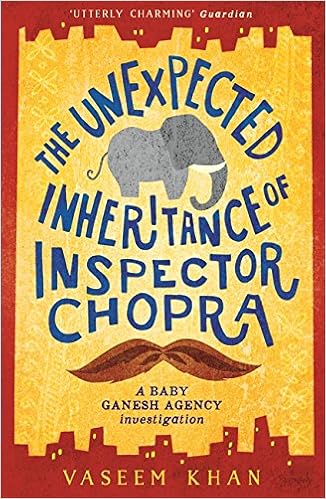
I'm reviewing 'The Unexpected Inheritance of Inspector Chopra'...


I picked this book up as a result of a recommendation from a friend and I was so glad I did.

Set in Mumbai, on Inspector Chopra's last day in the city police force, the story follows the central character through the trials and tribulations of investigating a death.  For his boss, the death is inconsequential.  For Chopra, it is not that simple and, despite being retired he continues to follow the case and ask questions, some of which get him into difficult spots.  What, at first, appears to be a straight forward case becomes complex with multiple twists and turns which reach a thrilling conclusion.

The location is colourfully drawn and provides a perfect backdrop for the numerous characters in the story.  Chopra, himself, is an upright, considerate and intelligent man and his character glides across the pages, but he knows when and how to be tough if he has to be.  His wife, Poppy, is demanding and something of a whirlwind as she pursues her various causes.  Both of these characters are very well drawn and it is easy to understand why they work so well together on the page.  Chopra's mother-in-law, on the other hand, is a thorn in his side as he is the son-in-law who was not, and still isn't, good enough for her daughter.  Within the household the dynamics between these three create some wonderfully comic moments which arise throughout the whole narrative and the wit is deliciously conveyed.

As for Chopra's inheritance... well, you will just have to read the book for yourself and, believe me, it is well worth it.  There are more in the series and they are equally as good and just as amusing!

Tuesday, 17 October 2017

An Afternoon with Three Authors

I am very pleased to be able to tell you that on Sunday October 29th, from 2pm until 4pm, I have been invited to take part in an event with two other authors at The Gallery in Slaithwaite.  So let me introduce them to you...


Tim Taylor, fellow Crooked Cat author and creator of Zeus of Ithome, will be talking about the inspiration behind, and reading from, his latest political thriller, Revolution Day.  Not that long ago, Tim was subjected to my detailed questioning about his writing as he very kindly agreed to appear on my blog as a guest.  You can read the interview here.  It will be great to finally meet him in person and if you want to know more about his book, then checkout Tim's  webpage.


Christina Longden, author of Mind Games and Ministers, is a member of the Holmfirth Writers' Group.  Chris will talking about her writing and reading from her recently published second book, A Cuckoo in the Chocolate.  Chris writes romantic comedies that have a political and satirical edge.  Hmm - sounds interesting doesn't it?  One thing I'm sure of though, no dratted cuckoo is going to get anywhere near my chocolate!  You can find out more about Chris on her Facebook Page.

And then there will be me trying my best to keep up with this auspicious company!  I will be introducing my recently published second novel, Merle, which follows on from Messandrierre and begins a few months after the end of book 1.  featuring my detective, Jacques Forêt, I will be talking a little about the location and my inspiration for the novels and reading a couple of short extracts.  But I won't be giving away the solutions to the crimes!  You can  find out more about Merle here.

It will an enthralling afternoon of politics, intrigue, crime, comedy and romance.  And to further enhance your enjoyment will be the wonderful surroundings of The Gallery, run by furniture maker, Wendy Beattie.  It is an incredible space!  Check out the website here.  Admission to the event is free and there is a café, so you can enjoy the readings with a favourite piece of cake and a cuppa.

If you are in the area, please stop by and say hello.  The Gallery is on Britannia Road, Slaithwaite, HD7 5HE - go through the Emporium to the door beyond and you'll find us.

Hope to see you there...

Tuesday, 10 October 2017

A camping conundrum...

Montbazon from the bridge over the Indre
...I'm recently returned from France and there has been a question that has been circling my mind all the time I've been on the other side of the channel.  Let me explain...

I've always camped from being in my very early twenties.  And OK, at twenty and twenty-one, money was not plentiful so maybe camping was an affordable solution. But the need for a cheap holiday was not, and still isn't, the real reason I took to camping and still use campsites.  For me it's all about the location, the view and the opportunity to go just about anywhere, to stay how long I want and to move on when I decide I've had enough.  So, take my pitch at Montbazon.  A small bustling town just south of Tours with a campsite on the banks of the river Indre.

The view from my pitch
On arrival one of the first things I do is take a walk around the site to see where the sun is, where the best view is, where the nearest neighbour will be...  And I normally pick a pitch that gives me a great view, that gives me some space between me and whoever else is parked nearby and that is not near the sanitary block.  Sanitary blocks on campsites kind of all look pretty much alike - so when you've seen one, you've seen them all!.  At Montbazon, I picked a pitch that overlooked the river and set my rig so that I could sit in the shade with only that view in front of me.  And, when I lost the sun in the very late afternoon I wasn't worried that it happened about ten/fifteen minutes earlier than some of the other spots behind me.  Why?  Because for the sake of taking about 15 steps in front of my pitch I could take my chair, my book or a glass of wine and sit on what I decided to call Plage d'Anglais.

And the conundrum?  In the two weeks that I was there only two other campers came and parked in the spots in the area where I was camped.  Everyone else - and there were a significant number of people who came and went and stayed for a few days - all clustered themselves around the sanitary block.  Maybe they were just being practical, I don't know.  Perhaps they thought it would give them an advantange for first in the showers in the morning.  Maybe!  But after a few days I noticed another aspect to this, what I considered to be, odd behaviour.  They all set their rigs in exactly the same direction!
My view from Plage d'Anglais


And the camping conundrum?  Why does anyone want to sit facing the bog wall when they can have a view like this...

Answers on a postcard, or in the comments box below, will be very gratefully accepted.


I will be back with more posts from Montbazon, and other interesting places, in the coming weeks.

Tuesday, 3 October 2017

Please welcome friend and author...

... Christine Hornsby.  Thanks for visiting Chris and, from your many books, which scene would you say you enjoyed writing the most and why?

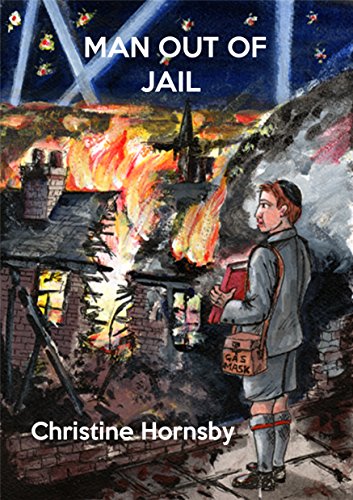
Oh, that’s an easy one.  About a third of the way into “Man out of Jail” I introduce an Italian Internee.  He had been only a shadowy character before – one described in bias, rumour and counter rumour.  When Ben, my protagonist eventually meets him they experience an immediate connection.
Being Italian, the prisoner of war was totally different from anyone Ben had ever seen or known before.  In pigeon English and with Gino’s expressive body language and ebullience they were able to communicate.  They seemed to have an immediate understanding of one another’s predicament.  At home in London, Ben had been bullied and that continued to be so.  Gino was always being castigated by the locals because he was different and a representative of his country’s allegiance to Germany.  They are both far away from home.  When Gino speaks so warmly of his mother and the village where he was brought up and his life in Monteregione, it takes Ben back to the Jewish influences in his past life.  They experience a shared nostalgia and empathy for one another’s current circumstances.  Alienated from everything familiar I tried to describe their unspoken togetherness and understanding.  Being young and missing his deceased father, Ben begins to see Gino as a father figure.  Not that he feels isolated or too uneasy as an evacuee on the farm but even before they met, Ben felt an instinctive understanding of the prisoner of war.  Finally, of course, there is a shared love of art; in Ben’s case cartoons.

I have presented Gino as a warm, thoughtful and congenial character so the question begs “Why are the locals antagonistic towards him?”  But Gino is not simply a character I introduce as a distraction.  No, he is pivotal to the plot.  In his own way, he effects everyone.  His warm character is juxtaposed not only with an angry, cantankerous farmer but also with the prejudices rained against him by the locals. Even so, I have given him an unfathomable quality... a mystery surrounds him and it is a mystery that my feisty gran character and Ben need to unravel.

I chose my internee to be Italian rather than German or Japanese for example because I love Italy, its people and the landscapes.  I love their warmth, their art, their culture but also because I thought such a person would exude a natural warmth, one that Ben could respond to because he is a sensitive character coming to terms with his own sense of alienation due to his Jewish background.

Thanks Chris, most interesting.  You can follow Chris on her website and on facebook

Tuesday, 26 September 2017

The Literary Lure of Portugal with Isabella May...

...Kate Clothier’s Salvation…
My debut novel, Oh What a Pavlova launches in just a few weeks and features no less than twenty-two travel destinations (trust me somehow it really does work…).  So when fellow Crooked Cat author, Angela Wren invited me to appear on her blog, I decided to take the opportunity to zone in on just two of these places (I can hear Angela breathing a sigh of relief from afar!): the stunning city of Lisbon, and its much overlooked neighbour, Oporto.

But how exactly did they come to appear in the book?
Well, first off, a little back story courtesy of the blurb:

Kate Clothier is leading a double life: a successful jet-setting businesswoman to the outside world, but behind closed doors, life with Daniel and his volcanic temper is anything but rosy. Some days – heck, make that EVERY day – cake is her only salvation.
Slowly but surely, the cities she visits – and the men she meets – help her to realise there is a better future.
And the ley lines of Glastonbury are certainly doing their best to impart their mystical wisdom…
But will she escape before it’s too late?

Kate lives in the small, rural Somerset town of Glastonbury, but works in a highly specialised field of publishing known as Foreign Rights, for a children’s publisher in Bristol (much to her abusive partner, Daniel’s dismay). Essentially, this means that every six weeks or so, she is on a plane to visit either her overseas clients, or to attend a book fair. Portugal is one of her favourite markets, not least because she adores the opportunity to scoff copious amounts of Pasteis da Nata, in all their eggy-vanilla glory… partly because she dreams of trading book sales for cake sales in her future book-encrusted café - and partly because it numbs the pain that is her domestic reality.
Some of Oporto's blue tiles
And yet Portugal offers Kate so much more than just pudding. Its place in ‘Pavlova’ is almost sacred. For in Portugal, many of Kate’s questions about the double lives she is leading are brought to the fore, and for once, she is unable to escape them.
Eduardo, her longstanding client/luxury dining companion seems to be carrying messages direct from the universe as to her real worth as a woman.  As do the flashbacks of another ‘Edward’, he's better known as Munch; whose work, ‘The Scream’ is impregnated in Kate’s brain following her recent trip to Oslo, causing her to wake up in several cold sweats. Perhaps she is finally realising that horror-filled face really is her mirror image captured on canvas?
Everywhere Kate turns in petrol-blue tiled Oporto, life is filled with dizzying colour and liberation – as well as chocolate mousse. She begins to realise every day could be this way, that she needn’t live parts of her life in inverted commas. From the port barrels to the unshackled Douro bridge, the laid back aura of this city pervades her soul.
Lisbon’s regal, marzipan-topped Pestana Palace only confirms the same (stuck-up businessmen hogging the couches in the day room, to one side). Kate is worthy of great things (infinity pools, decadent breakfasts and rose petals on the bed), and the simplest of things beside: freedom, respect, love: Self-love.

Monumento aos Descobrimentos, Lisbon
Oh! And how could I forget to mention Piers Middleton? The Golden Boy who used to work for her company, ‘She Sells Sea Shells’, is mysteriously hanging around the Portuguese airline check-in desks, swigging on a bottle of Fijian water, eyes panning the vista, in case a European Vogue Editor should be recruiting for cover models… Kate guesses, anyway.
Well, Kate might be sure it’s nothing more than a far-fetched coincidence, but I don’t think I’d be as naïve.
The question is though: will Portugal’s insights be enough? Or will the dreaded P word: procrastination, rear its ugly head until Paris o’clock… and beyond?
You’ll just have to buy the book to find out!

... about the author  Isabella May lives in (mostly) sunny Andalucia, Spain with her husband, daughter and son, creatively inspired by the sea and the mountains.  When she isn’t having her cake and eating it, sampling a new cocktail on the beach, or ferrying her children to and from after school activities, she can usually be found writing.
As a Co-founder and a former contributing writer for the popular online women’s magazine, The Glass House Girls - www.theglasshousegirls.com - she has also been lucky enough to subject the digital world to her other favourite pastimes, travel, the Law of Attraction, and Prince (The Purple One).

She has recently become a Book Fairy, and is having lots of fun with her imaginative 'drops'!
Oh! What a Pavlova is her debut novel... and her second novel has already been submitted to her publishers: watch this space...

You can follow Isabella May on her website, on Twitter - @IsabellaMayBks Facebook
 and Instagram - @isabella_may_author


Tuesday, 19 September 2017

Come stroll with me...

Tour de Pannessac
... through yet more delightful streets and sights of interest in Le Puy-en-Velay.


In July I took you on a tour of Le Puy-en-Velay and in that post I mentioned the Tour de Pannessac, the former royal entrance to the town and dating from the 14th century.  Our short walking tour today will begin there.  Standing here, next to the tower, I have to wonder whether Charlemagne was on foot when he visited the Le Puy or on horseback.   Probably the latter which unfortunately means that I can not claim to be following in his footsteps, just his horses hoof prints, which does not have quite the same panache does it?  But King Louis IX also passed this way in 1254 on his return from the crusades and he gave the town the right to add gold coloured fleurs-de-lys to the coat of arms.

Decorated house
Keeping the tower on your right, continue along boulevard Carnot to the square and then  go right.  The road climbs gently and after a short distance there is a left, rue Montferrand.  I recommend that you take this street and continue up the slight incline and you will find yet another of the many surprises that this town has to offer.

Continue to the top of the street which connects with boulevard Montferrand and takes you, eventually, to steps that lead to rue Chosson and the church on the hill.  Although it's not strictly a hill.  It's actually a volcanic plug - a stream of magma that has hardened in the vent of an ancient volcano - that has been exposed by erosion.  Standing at a height of 82m above the rest of the city, the church, St Michel d'Aiguilhe is small but well worth the effort of the climb.  The chapel was built in the 10th century (961 to be exact) at the insistence of the bishop Gothescalk of Le Puy following his return from a pilgrimage to Compostela and it has towered above the city ever since.  The frescoes in the interior are primitive but the colours are still vibrant along with the decorative stonework around the outside.  In the 1950's the chapel and altar were restored and it was during that process that a wooden figure of Christ was discovered.  It is thought to have been created in the 10th century.
Another fresco

Back in the heart of the old town and, as I meander through the narrow streets and onto rue Raphaël, I discover yet another little surprise.  This street originally housed the leading citizens of the town along with other well-healed families, their wealth displayed in the painted decoration on their houses and intricate masonry.  A little further along the street, out of the corner of my eye, I spot a man dressed in doublet, hose and a cloak in an archway and I begin to think I've slipped back through time.  Then I stop and look again and realise it is yet another fresco and I smile to myself.  'He's clearly a wealthy gent', I tell myself, 'collecting some Livres from a 16th century cash machine!'

This is my last post about Le Puy, however the city is a location that I use in my current novel, Merle.  To solve his current mystery, my central character and investigator, Jacques Forêt, follows a suspect to Le Puy and what he finds there, surprises him. 

I have no doubt, at some point in the not too distant future, I will be back in Le Puy and I will look forward to that!